

 Share
Share 



The national anthem has always been one of the Super Bowl’s quiet pressure points. It lasts barely two minutes, yet fans argue about it for days.
By the time Super Bowl 60 arrives, that short performance will also be a fully tradable moment on prediction markets, where prices move on seconds, not sentiment.
Instead of picking an over or under and waiting for a result, traders are increasingly treating the anthem like a live question with odds that breathe all week. The focus is not fandom. It is timing, structure, and how small details can shift probabilities before kickoff.
Who Is Performing the National Anthem at Super Bowl 60?
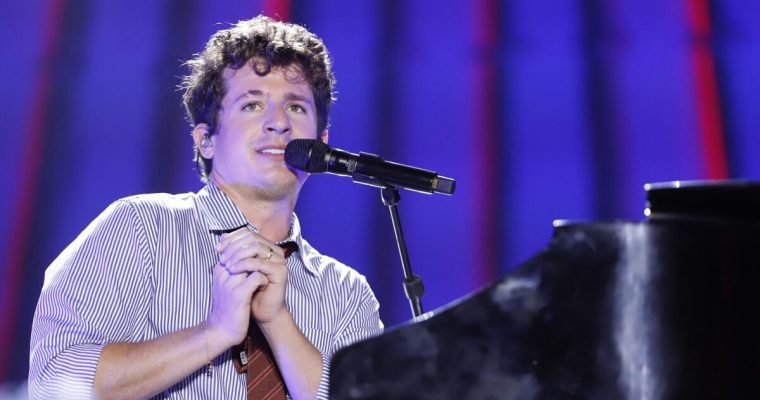
For Super Bowl 60 (Super Bowl LX), the U.S. National Anthem (“The Star-Spangled Banner”) will be performed by Grammy-nominated singer and songwriter Charlie Puth ahead of the big game at Levi’s Stadium in Santa Clara, California.
Puth, known for hits like See You Again, Attention, and One Call Away, has been tapped by the NFL to deliver the anthem on Sunday, February 8, 2026, as part of the pregame entertainment lineup.
His performance is part of a larger slate of pregame music that also includes renditions of America the Beautiful and Lift Every Voice and Sing by other artists.
Trade on Sports, Politics, and MORE
Largest Prediction Market in the US
Hundreds of Markets to Choose From
Trade on Sports, Politics, and MORE
Largest Prediction Market in the US
Hundreds of Markets to Choose From
Why Prediction Markets Care About Anthem Timing
Prediction markets thrive on outcomes that are clearly defined but difficult to predict perfectly. The national anthem checks both boxes. It has a fixed melody and lyrics, yet performances vary widely based on tempo, instrumental choices, and dramatic pauses.
Historical data gives traders a starting point. Since the mid-2000s, Super Bowl anthems have typically landed between 1 minute 30 seconds and 2 minutes 30 seconds. More recent games have clustered closer to the middle.
From 2020 through 2025, the average anthem length was just under 2 minutes, or roughly 116 seconds. That average often becomes the psychological anchor for early market pricing.
Markets do not stop there. A performer’s past style, whether the anthem is sung solo or with accompaniment, and even stadium acoustics, can nudge expectations higher or lower.
How Anthem Contracts Are Structured On Prediction Markets
On platforms like Kalshi prediction market, anthem trading usually revolves around yes-or-no contracts tied to a specific threshold. A common example would be whether the anthem lasts longer than 120 seconds.
Each side of that question trades as a contract priced from 0 to 100. A price of 65 implies the market believes there is a 65 percent chance the anthem exceeds the listed time. Traders can buy or sell at any point before the market closes, which is typically right before the performance begins.
This setup creates flexibility sportsbooks cannot match. If new information changes the outlook, traders can exit positions instead of being locked into a single wager.
What Actually Moves Anthem Prices
Data matters, but information flow matters more. Rehearsals have quietly shaped anthem markets for years. In past Super Bowls, unofficial timing leaks surfaced hours or even days before kickoff, often pushing markets sharply in one direction.
Prediction markets react quickly to those signals. If credible timing chatter suggests the anthem ran long in rehearsal, “over” contracts tend to climb rapidly. If the rehearsal appears stripped down or faster-paced, prices usually slide toward the under.
Markets also react to structural details. A piano intro can add several seconds if it blends into the official timing window. Extended holds on the final word “brave” have historically pushed performances over the line, sometimes by just a second or two. Those tiny margins are where traders either gain or lose value.
Specific Trends Traders Watch Closely
Several patterns tend to show up in anthem data:
Solo vocalists generally finish faster than duets or group performances. Instrumental-only intros are often excluded from official timing, depending on market rules. Pop and R&B singers tend to stretch phrases more than country performers, though that is far from universal.
Another detail traders monitor is broadcast pacing. Television producers occasionally allow extra space before kickoff, especially in milestone Super Bowls. That flexibility can subtly influence how long performers linger on final notes.
These are not guarantees, but they shape how early prices form and why markets rarely open at an even 50-50 split.
Risk and Resolution Still Matter
Anthem markets are clean on the surface but messy underneath. There is no official NFL stopwatch, which means the settlement depends on predefined criteria. Most markets specify that timing begins with the first sung lyric and ends with the completion of the final word.
When performances land right on the edge, disputes can arise. Past Super Bowls have seen different books grade the same anthem differently, sometimes resulting in refunds or split decisions. Prediction markets aim to avoid that by publishing clear resolution rules in advance, but gray areas still exist.
That uncertainty is part of the appeal. Traders are not just predicting how long the anthem will last. They are predicting how it will be interpreted under the rules.
Why Super Bowl 60 Could See Heavier Anthem Trading
Super Bowl 60 represents a symbolic checkpoint. Prediction markets are larger, more visible, and more actively discussed than they were even a few years ago, when sports betting sites were the only mainstream option. Cultural moments tied to the game are increasingly treated as legitimate tradable events.
The anthem fits perfectly into that trend. It resolves quickly, has deep historical context, and attracts attention well beyond hardcore bettors. For traders, it offers a fast-moving market with a defined endpoint before the game even starts.
Trade on Sports, Politics, and MORE
Largest Prediction Market in the US
Hundreds of Markets to Choose From
Trade on Sports, Politics, and MORE
Largest Prediction Market in the US
Hundreds of Markets to Choose From

