

 Share
Share 



What do you call The Big 12 when it’s not 12?
Little Dozen? The Shrinking Eight?
None of those would work very well for an athletic conference that seeks to stay relevant in the modern era of collegiate sports. So, when the Big 12 announced the addition of four schools last week, they sent a quick signal that they intend to stay big for a while.
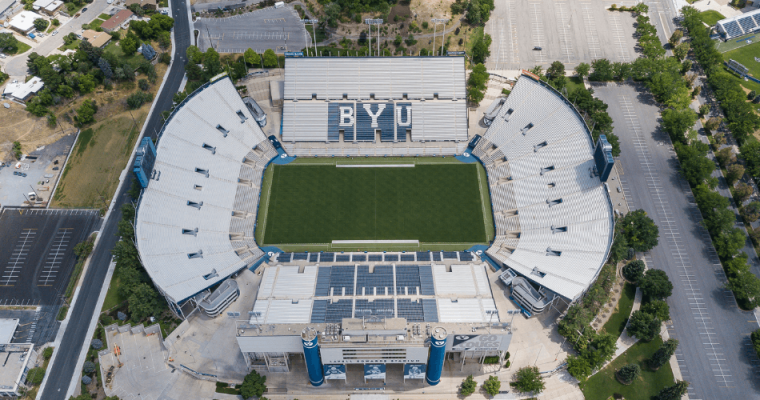
On September 10, the Big 12 announced that they would welcome four schools: Brigham Young University, the University of Central Florida, the University of Cincinnati, and the University of Houston to their conference in time for the 2024-25 NCAA athletic year.
The decision was in response to the announcement in August by Big 12 members Oklahoma and Texas that they would be leaving the conference in 2025 to play in the SEC.
The loss of the Sooners and Longhorns, two of the largest and most popular schools in the Big 12 threatened to marginalize the conference, which was founded in 1994. The Big 12 originally consisted of the eight schools from the former Big 8, as well as four schools from the now defunct Southwest Conference, all of them from Texas.
In the last decade, four teams had bolted from the Big 12: Colorado in 2011 (for the Pac 12); Nebraska in 2011 (for the Big 10); and Missouri and Texas A&M in 2012 (both for the SEC). Two of those voids were filled when Texas Christian and West Virginia were invited to join in 2012.
Prior to the invitation to the four schools, the Big 12 faced the possibility of shrinking to only eight members when powerhouses Oklahoma and Texas moved on. But few observers thought the leaders of the Big 12 would let that happen. With the NCAA carved into five “power conferences,” (ACC, Big 10, Big 12, Pac 12, and SEC), there has been speculation that the Big 12 could be elbowed out, leaving a quartet with the leverage for playoff spots, players, and huge TV contracts.
The move by the Big 12 to expand gives the conference some heft in light of the recent agreements between the Atlantic Coast Conference, Big Ten and Pac-12. Those three conferences agreed in August to forge an alliance to work together on scheduling, governance, and expansion of the Division-I college football playoffs.
Two Divisions Will Split the Big 12 for NCAA Football, Basketball
East Division
- West Virginia
- Cincinnati
- University of Central Florida
- Kansas
- Kansas State
- Iowa State
The East Division of the new Big 12 will have one obvious football powerhouse: the Mountaineers of West Virginia, who have a much stronger program than the other five schools. In recent years, Cincinnati has improved their football program, and is poised to become a top 25 program nationally if that trend continues.
West Division
- BYU
- Oklahoma State
- Baylor
- Texas Tech
- TCU
- Houston
Four Texas schools and Oklahoma dominate this conference for football, with this alignment expected to be in place for the 2025-26 NCAA season.
Though the conference has not made an official declaration yet, it’s presumed that winners of each division will play in the Big 12 Conference Championship.
The Elephants In The Room
This move by the Big 12 solidifies their future, bringing four strong academic schools, all of whom have either burgeoning athletic programs or have established themselves as solid teams in a few sports.
A collapse of the Big 12, which some feared, is not likely. But there will be sensitive matters to resolve. For example, the expansion plan is set to kick in one year before Oklahoma and Texas exit. That means those two schools will be forced to face the new members of the conference before they go out the door.
For now, little is being said, from either the conference side or the two schools planning to leave the Big 12. Notably head coach Lincoln Riley of the Sooners made no comment when asked about the four new schools coming into the league. But fan bases will have a lot to say about it, as one huge rivalry disappears (Texas vs. Oklahoma), and egos have been bruised in the conference offices and athletic offices of member schools.


