

 Share
Share 



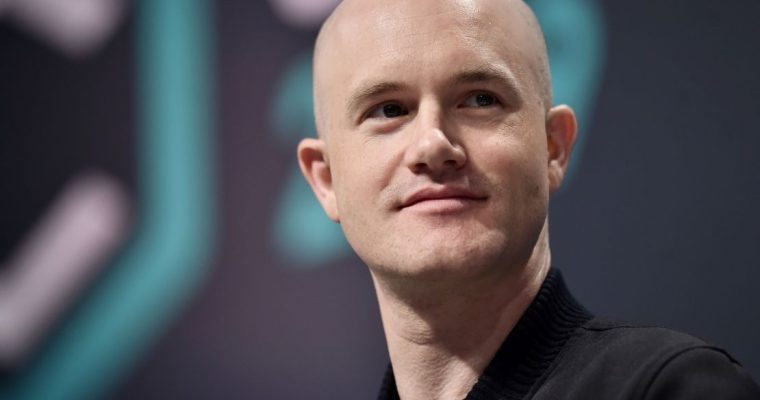
When Brian Armstrong wrapped up Coinbase’s quarterly earnings call last week, no one expected the cryptocurrency CEO to make headlines for five random words.
Yet when he said “Bitcoin, Ethereum, blockchain, staking, and Web3,” he wasn’t talking about innovation or company growth—he was cashing in on a very different kind of market.
Those five words set off a chain reaction in top prediction market sites like Kalshi and Polymarket, where users had bet on which exact terms Armstrong would say during the call. Within seconds, thousands of dollars changed hands.
What was meant as a quick laugh turned into one of the biggest cautionary tales yet for the growing world of prediction markets.
The Five Words Heard Around the Market
Armstrong’s offhand remarks might have lasted only a few seconds, but the fallout has lasted days. In total, more than $80,000 in trades were placed across Kalshi and Polymarket on contracts predicting which buzzwords would be mentioned during Coinbase’s earnings call.
When Armstrong closed with the now-infamous list, those markets instantly settled—handing profits to anyone who bet correctly. He later posted on X, joking that it was a spontaneous move after “someone on our team dropped a link in the chat.”
That joke didn’t land with everyone. Jeff Dorman, CIO at Arca, summed up the sentiment of many in the crypto community by calling it “open market manipulation,” even if done playfully.
For many, it wasn’t about the money—it was about what it revealed: just how easy it is to tilt the odds in prediction markets that rely on words, timing, or behavior from a few key people.
How Mention Markets Became a Thing
Mention markets are a niche within the broader prediction market boom. Instead of betting on who will win an election or how the economy will perform, users wager on whether certain words or phrases will be said publicly—on an earnings call, in a speech, or even on a podcast.
These contracts pay out based on simple outcomes: did the CEO mention “AI”? Did the president say “inflation”? In Armstrong’s case, traders were betting on Coinbase-related terms like “Web3” or “staking.”
The total money at stake wasn’t huge, but the implications are. By rattling off those words, Armstrong didn’t just influence a market—he exposed a loophole that turns prediction markets from crowdsourced forecasting tools into playgrounds for anyone with a microphone and awareness of the game.
Where Prediction Meets Manipulation
Prediction markets have long been framed as a way to capture the “wisdom of the crowd.” The idea is simple: when thousands of people wager real money on the likelihood of future events, the odds should, theoretically, reflect the most informed collective judgment available.
But Armstrong’s stunt shows how fragile that concept can be when the subject of the bet controls the outcome. Mention markets, by design, are “readily susceptible to manipulation”—a phrase that, under U.S. regulations, should disqualify them from operation.
Platforms like Kalshi, which are regulated by the Commodity Futures Trading Commission (CFTC), claim to monitor for manipulation and restrict trading by insiders. Still, the rules don’t explicitly cover someone like Armstrong, who may not have placed a bet but directly influenced the results.
In securities trading, there’s a clear line between joking and manipulating. For event contracts, that line doesn’t exist yet.
A Regulatory Gray Zone Gets Grayer
Under normal circumstances, a federal agency would likely review whether a CEO’s actions breached market integrity standards. Yet the CFTC—the body responsible for overseeing event contracts—remains hobbled.
Four of its five commissioner seats are currently vacant under the Trump administration.
Without a full board, the agency’s enforcement focus has stayed limited to registration and compliance rather than deeper integrity issues. Outgoing Commissioner Kristin Johnson even warned earlier this year that prediction markets have “too few guardrails and too little visibility.”
That vacuum comes as prediction markets explode in popularity.
What Makes This Different from Traditional Betting
The difference between licensed online sportsbooks and prediction markets is more than just semantics. Sportsbooks must follow strict rules: background checks for operators, geolocation technology, integrity monitoring, and responsible gambling programs. Every action is logged and subject to fines.
Prediction markets, by contrast, operate under a financial derivatives framework. They don’t need state licenses, don’t pay local taxes, and face no requirement to flag suspicious betting activity. When Armstrong played with Kalshi and Polymarket’s “mention” markets, no watchdog was waiting to blow the whistle.
That’s exactly what worries lawmakers. Two congressional committees have already pressed sports leagues to tighten integrity standards following recent insider-betting scandals. Now, those same concerns are spilling into the prediction space—where anyone with influence could, intentionally or not, sway the outcome of a contract.
Politics, Power, and Prediction
This isn’t happening in a vacuum. Just weeks ago, Trump’s Truth Social announced plans to launch Truth Predict, its own prediction marketplace. His son, Donald Trump Jr., serves as an adviser to both Kalshi and Polymarket—two of the biggest players in the space.
Those connections raise even more questions about how intertwined politics, media, and prediction markets could become. If the people setting the agenda also hold influence over the markets betting on that agenda, what happens to credibility?
The timing couldn’t be worse. Congress is already considering national standards for gambling advertising, data transparency, and the use of AI in wagering. But those rules wouldn’t apply to prediction markets, which exist in a regulatory gray zone outside traditional gaming law.
A Joke That Turned Into a Warning
Armstrong’s defenders argue it was harmless fun—a tongue-in-cheek jab at the overhyped world of crypto betting.
Others see it as a wake-up call. In just a few seconds, one of the most influential figures in the industry demonstrated how easily a decentralized market could be bent to someone’s will.
The reaction from Polymarket itself summed it up best: “Diabolical work.”
What’s clear is that prediction markets are maturing faster than regulators can keep up. They’ve gone from quirky forecasting tools to billion-dollar ecosystems shaping political narratives, financial speculation, and now corporate behavior.
If Armstrong’s stunt proved anything, it’s that prediction markets need more than clever engineering—they need clear ethical standards. Without them, the next “fun” moment could turn into something far more damaging.

