
 Share
Share 



A prediction market company found an unconventional way to introduce itself to New Yorkers: by picking up their grocery tabs.
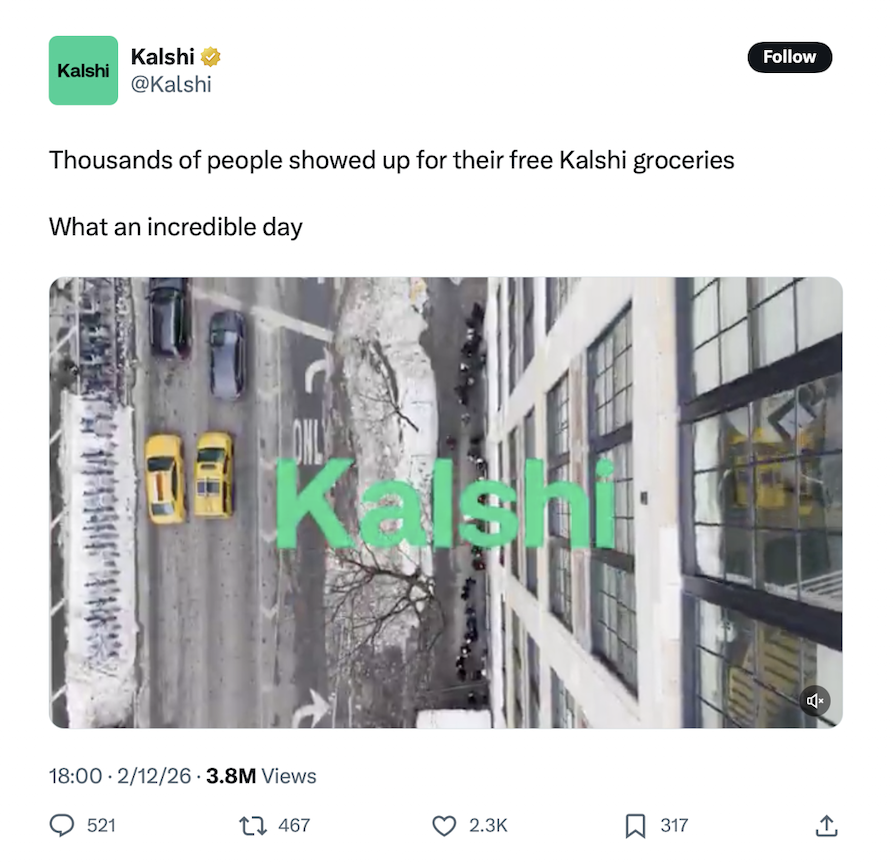
For three hours — from noon to 3 p.m. — Kalshi paid for $50 worth of groceries per person at a Westside Market in Manhattan. What began as a modest promotion quickly snowballed into a scene resembling a cross between a tech product launch and a block party. The line didn’t just wrap around the corner; it stretched four full blocks through the winter cold.
A cold morning with a warm heart
Westside Market CEO George Zoitas said he did not expect such a massive turnout. Instead, he arrived to find hundreds of people waiting in freezing temperatures. Parents stood with bundled-up children while college students shuffled to stay warm. A light snowfall added to the surreal atmosphere.
Zoitas reportedly handed out coffee himself, concerned about the duration of the wait. If roughly 3,000 shoppers utilized the full $50 allowance, the total cost would have reached $150,000. For a fast-growing financial startup, it represents a sizable marketing spend for a single afternoon.
Predicting a new kind of corporate kindness
The most striking element of the scene was the lack of brand recognition. A large share of those in line had no idea what Kalshi was. Some learned about the event via social media, while others looked up the company while waiting, still unsure of what “prediction markets” entailed.
Some bystanders described the concept as gambling under a different name. Others expressed concern over how addictive trading on event outcomes might become. However, gratitude was equally present. One mother noted that her SNAP benefits had been exhausted and the assistance was vital. Several people acknowledged that regardless of their skepticism toward the business model, $50 in groceries made a tangible difference.
Will you be my trader? Battle for NY’s heart
Prediction markets allow users to trade contracts based on real-world outcomes, ranging from political elections to economic indicators. While the concept can feel abstract online, placing it inside a neighborhood grocery store shifted the tone. Signs throughout the store asked shoppers to consider questions such as whether New York gas prices would cross a certain threshold this year or if the city would open a municipal grocery store by a set date.
The crowd inside was not the typical tech or crypto audience; it included retirees, service workers, and families stocking up on essentials. Many gravitated toward meat —specifically beef — even though chicken offers more value per dollar. In the grocery aisle, preference often outweighs pure math. Kalshi appears to be betting that exposure in everyday settings will make its product feel more accessible and mainstream.
Polymarket ups the ante
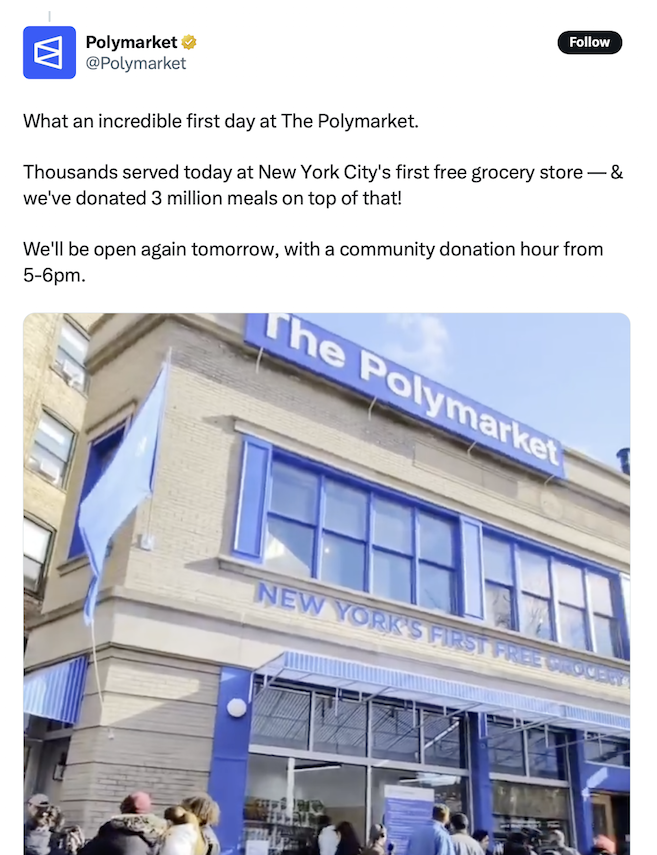
Just as Kalshi’s giveaway began, competitor Polymarket upped the ante, announcing it would open a completely free grocery store for five days the following week. The timing underscored an intensifying rivalry. Both platforms are attempting to move beyond niche internet communities to present themselves as legitimate financial tools.
Critics argue these displays of generosity are geared toward customer acquisition and long-term trading revenue rather than charity. Prediction markets earn money through trading fees, making frequent, high-value users essential to the bottom line.
Still, for those leaving Westside Market with full bags, motives mattered less than the immediate relief. Bills were lighter and freezers were fuller. As one shopper noted with a laugh: Prediction markets are fine with her, as long as she’s the one coming out ahead.