
What is NFL Survivor Pool Strategy?
On the surface, NFL survivor pools look simple: pick one team each week, and if they win, you move on.
The reality is that winning isn’t about gut instincts or picking the “obvious” favorite each week. Survivor pools demand rigorous planning and a deep understanding of probability, risk, and game theory. You need to evaluate win odds, opponent behavior, and future value simultaneously — calculations far too complex to solve on the back of a napkin.
Without advanced data and analysis, most players run out of strong options or get eliminated when the crowd collapses on a bad pick. With the right strategic framework, though, you can tilt the math in your favor and significantly improve your odds of outlasting the field.
Many casual players survive the first few weeks by always taking the biggest favorite. That works short-term, but sets you up to fail later when you run out of strong options. The two main pitfalls:
- Running dry: If you burn elite teams too early, you’ll face weaker choices late in the season.
- Following the herd: Picking the same “safe” teams as everyone else lowers your odds of outlasting them. Survivor pools are won by separating from the crowd at the right moments.
The upside is that survivor pools reward sharp play. With the right data-driven strategy, you can multiply your odds of winning compared to the average entry. Here are five key tactics for 2026.

Tip 1: Track Survivor Pick Popularity
Winning isn’t just about surviving each week. It’s about surviving while others get knocked out. If half your pool piles on one team and that team loses, your win probability can double in a single week.
Those who zigged while the herd zagged gained a huge edge.
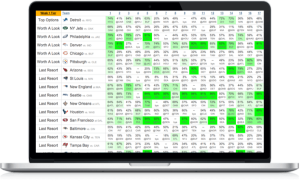
In 2026, you should actively monitor pick popularity, which can be done by using PoolGenius’ data grid and season planner tools. The goal: find spots where fading the crowd creates high-leverage upside.
Tip 2: Balance Popularity Against Win Odds
It’s not enough to just fade the crowd. You also have to respect elimination risk. Survivor is about threading the needle between safety and leverage.
Look at projected win odds each week. If multiple teams sit in the 75–80% win range, burning one might not be worth it. But if one team is far safer than the rest, they may still be worth using—even if popular.
In 2026, expect matchups of strong teams at home against weaker competition to draw massive pick popularity. Sometimes, swallowing the chalk is still the right play if the alternatives are materially riskier.
Tip 3: Use Expected Value (EV) To Find the Best Pick
EV quantifies the tradeoff between win odds and pick popularity. A team with strong win odds but extremely high popularity may not offer as much upside as a slightly riskier team with far lower ownership.
In recent seasons, heavy favorites have consistently drawn large pick percentages early in the year because they appear “safe.” While these teams often have high win odds, they are also frequently overused. That reduces their relative value in large pools.
From an Expected Value standpoint, those same teams are often more valuable later in the season. They may project for similar win odds in future matchups, but with much lower pick popularity after many entries have already used them. In other words, you can often get the same level of safety with far greater leverage by waiting.
When heavily picked teams lose, which happens every season, it creates massive swings in survivor pools. Entries that avoided those high-popularity spots not only survive but gain significant equity. This is a textbook example of why EV matters. When you use a strong team can be just as important as which team you choose.
In 2026, teams like Kansas City, San Francisco, and Buffalo are likely to appear as double-digit favorites multiple times throughout the season. Identifying the optimal weeks to use them, instead of following the crowd early, can be a major edge.
Tip 4: Consider Future Value (Planning Ahead Matters)
Smart survivor players plan not just for this week, but for the next several. Future Value measures what you give up later if you use a team now.
Many top teams enter each season with multiple favorable matchups, including several games with win odds above 70 to 80 percent early in the schedule. However, projections typically reveal later weeks where those same teams are just as or even more valuable because there are fewer strong alternatives available.
That makes using elite teams too early a common mistake.
Holding onto high Future Value teams is like saving your strongest pieces for the endgame. Survivor contests are won by balancing short-term safety with long-term flexibility and timing your picks accordingly.
Tip 5: Adapt To Your Pool’s Size and Rules
There’s no universal strategy. The optimal approach depends on how big your pool is and what rules it uses.
- Big pools (1,000+ entries): Usually last the full 18 weeks. You’ll need to save elite teams and embrace riskier contrarian picks at the right moments.
- Small pools (under 50 entries): Might end by Week 10 or 11. In those cases, grabbing elite favorites early can actually be optimal.
- Special rules (double-pick weeks, etc.): Plan ahead so you’re not scrambling with weak options when the rules tighten.
In 2026, that may mean burning a powerhouse team early in a small pool but saving them for November in a large one. Context is everything.
The Bottom Line
NFL survivor pools in 2026 will be as cutthroat as ever. Luck plays a role, but over time, skill dominates. The difference between surviving a few weeks and winning outright comes down to strategy: managing popularity, win odds, EV, and future value.
The reality is that doing this correctly requires significant math and data crunching. That’s why PoolGenius built its NFL Survivor Picks product. It delivers pool-specific recommendations, real-time EV analysis, and planning tools that separate serious players from the field.
