
 Share
Share 



New Jersey has asked the U.S. Supreme Court to decide whether federal commodities law prevents states from enforcing their gambling laws against sports event contracts offered by prediction-market operator Kalshi.
“Companies like Kalshi claim to offer legal sports betting in all 50 States, but they refuse to follow the gambling laws of any State,” said New Jersey Atty. Gen. Jennifer Davenport in a release this week.
The state’s petition follows an Aug. 28 ruling by the Ninth U.S. Circuit Court of Appeals that allowed Nevada regulators to enforce state gaming laws against Kalshi’s sports contracts. That ruling conflicts with a decision by the Third Circuit from April that found the Commodity Exchange Act likely preempts New Jersey’s enforcement efforts.
New Jersey appeals to Supreme Court
New Jersey is seeking a review of the Third Circuit’s decision in KalshiEX v. Flaherty. The appellate court upheld a preliminary injunction that has blocked the state from treating Kalshi’s sports markets as unlicensed sports betting within New Jersey.
“This is a states’ rights issue,” said New Jersey’s Division of Gaming Enforcement Interim Director Mary Jo Flaherty. “In New Jersey, gaming is prohibited by the state Constitution, except for exceptions approved by New Jersey voters. In this case, the State is upholding the will of New Jerseyans regarding the manner in which gaming can be conducted.”
Kalshi says its products, which allow users to take positions on the outcomes of sporting events, are federally regulated event contracts traded on a Commodity Futures Trading Commission-registered exchange. Therefore, the contracts are under the CFTC’s authority rather than state gaming regulators’ control.
New Jersey argues that the products are essentially sports wagers and should be subject to the state’s licensing, taxation and consumer-protection rules. In its filing, the state said Congress did not transfer oversight of a multibillion-dollar sports-gaming market from states to the CFTC.
“We’re calling on the Supreme Court to resolve this issue and recognize that Congress did not silently make the sports-betting industry immune from state law,” said Davenport.
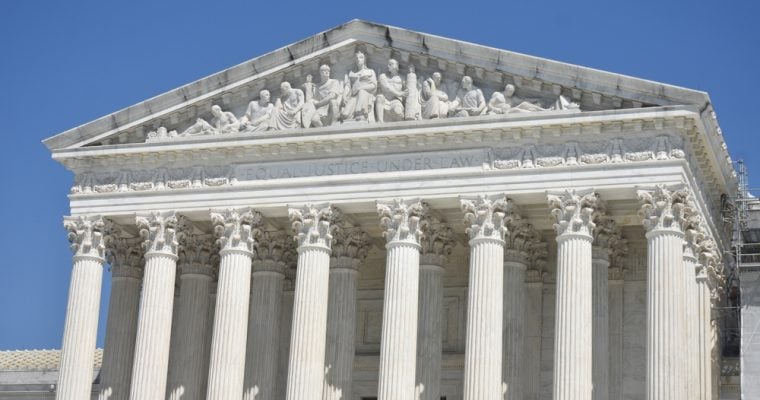
The Supreme Court does not have to take New Jersey’s case. If it does, it could establish whether federally regulated prediction-market exchanges may list sports-related contracts nationwide without complying with states regulations.