


 Share
Share 



Let’s be honest. When it comes to regulating new industries, the U.S. tends to move like it’s stuck in molasses. Meanwhile, Europe’s already halfway through the race. We’ve seen this before with online gambling, data privacy (hello GDPR), and now, it looks like crypto gambling is the next chapter in the transatlantic regulatory gap.
Crypto casinos—those fast-moving, high-tech platforms where players gamble using Bitcoin, Ethereum, and other digital coins—are exploding in popularity. In the U.S., they’re still sitting in a legal gray area. In Europe? They’re actively being shaped, debated, and in some cases, even embraced.
So what can Uncle Sam learn from the Old Continent? Is this another case of the U.S. playing catch-up? Let’s take a closer look.
Europe Is Doing Its Crypto Homework (Finally)
First off, Europe’s not perfect—but they’ve at least started turning in assignments. The big shift came with the introduction of MiCA (Markets in Crypto-Assets Regulation), the EU’s first-ever comprehensive crypto legislation.
It doesn’t focus specifically on crypto casinos, but it sets the foundation for how digital assets should be handled across all member states. Think licensing, stablecoin oversight, and mandatory consumer protections.
What does that mean in practice?
Well, in places like Malta, Italy, and Estonia, crypto casinos aren’t just tolerated—they’re getting a framework to operate legally. Malta has a regulatory sandbox specifically for crypto gaming. Italy’s got a mature iGaming structure that’s flexible enough to adapt. Even Estonia, one of the most digitally advanced countries in the world, is prepping its licensing process to align with EU-wide rules.
Europe’s betting on crypto—not with blind faith, but with guardrails, and that’s what makes their model attractive.
The U.S. Is Stuck in State-by-State Limbo
Now flip the globe. In the U.S., crypto casinos are booming—just not under any real domestic regulatory supervision. Most of the action is happening offshore, where platforms are licensed in Curaçao or Panama and simply “accept” U.S. players. That’s fine until something goes wrong, and when it does, players are basically on their own.
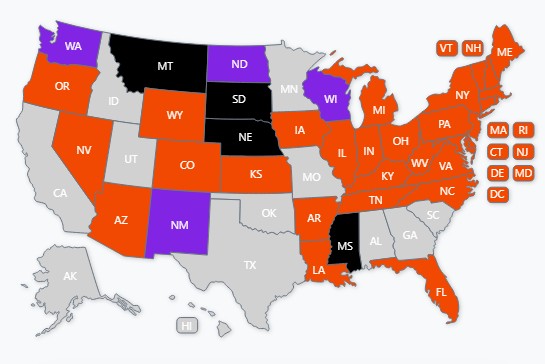
The federal government has no law explicitly banning crypto gambling. But they also haven’t made it legal. UIGEA (the 2006 Unlawful Internet Gambling Enforcement Act) only stops banks from processing illegal gambling payments—it doesn’t say anything about wallets full of Ethereum. So crypto casinos operate in a fuzzy space, and each state can interpret things differently.
New Jersey and Michigan, two of the most mature online gambling states, don’t currently license crypto casinos. That silence leaves players in a weird spot: allowed to play, but unprotected.
What Europe Gets Right
Three things our next-door continental neighbors have mastered.
1. Clarity is King
Europe’s not always fast, but when it acts, it tends to provide a clear playbook. MiCA provides crypto businesses with a checklist to follow, including licensing, KYC protocols, and stablecoin reserves. If you want to run a crypto casino in Europe, you at least know the rules.
2. Regulatory Sandboxes
Instead of outright banning everything until it’s “perfect,” countries like Malta and Estonia have created sandbox environments. This lets crypto casinos experiment under supervision while the government collects data and adjusts. The U.S. could use a few of those.
3. Consumer Protection First.
Europe’s approach isn’t just about revenue. From strict KYC rules to AML enforcement, regulators are working to protect players, not just tax them. Responsible gambling tools and data-sharing initiatives (like the UK’s GAMSTOP) create safety nets that are often missing in crypto-first environments.
Where Europe Still Misses the Mark
Let’s not pretend Europe is a crypto gambling utopia.
1. No Unified Crypto Gambling Law.
MiCA covers crypto assets, not crypto casinos specifically. Gambling rules are still handled country by country. That means what’s legal in Italy might be illegal in France. Cross-border confusion is real.
2. Slow Licensing Bottlenecks.
Some regulators still treat crypto like it’s radioactive. Even in countries with sandbox programs, full-scale licensing for crypto casinos is rare, and delays frustrate operators trying to go legit.
3. Not Enough Enforcement on Unlicensed Sites.
Despite these rules, Europe still sees a significant amount of traffic going to unlicensed offshore sites. Enforcement lags behind innovation, and without cooperation between countries, shady operators slip through.
Can the U.S. Catch Up? Or Leap Ahead?
Here’s the thing: the U.S. doesn’t have to copy Europe. It could leapfrog it.
Imagine a federal framework for crypto gambling that encourages innovation while enforcing strict protections. One where licensed platforms can operate in multiple states, and consumers are guaranteed fairness, fast withdrawals, and fraud protection. Add in the ability to audit game fairness on-chain, and now you’re talking about a digital gold standard.
But let’s be real—it’s not happening tomorrow. Most U.S. lawmakers are still wrapping their heads around NFTs and stablecoins, let alone decentralized gambling platforms. Enforcement is reactive. Regulation is slow, and the longer it stays that way, the more the crypto gambling industry will evolve outside their reach.
Regulation or Regret: What Comes Next for U.S. Crypto Casinos?
Europe isn’t perfect, but at least it’s moving and moving in a direction that prioritizes regulation, player protection, and long-term viability.
If the U.S. wants to avoid another explosion of “gray market” operators dominating the space—like what we’ve seen in sweepstakes casinos—it needs to start laying a regulatory foundation now. That doesn’t mean shutting everything down. It means building rules that match the tech, the risks, and the expectations of modern players.
Because let’s face it: crypto gambling is here, and it’s not waiting for Washington to catch up.

