
 Share
Share 



Gaming Edge’s TL;DR
- Wildfire prediction markets are moving from niche curiosity to regulatory flashpoint.
- Contracts tied to fire spread and containment are drawing criticism from experts, while lawmakers and state officials are starting to push back.
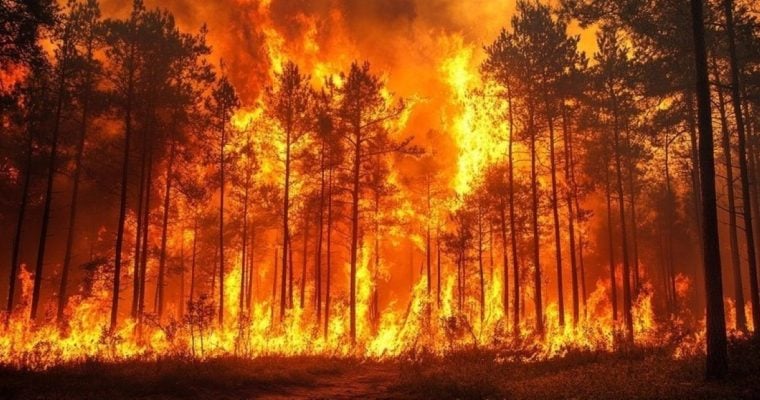
Prediction markets have long pitched themselves as information tools, but wildfire contracts are testing that argument in a very public way. People traded wildfire-related contracts during the January 2025 Los Angeles fires on Polymarket, including markets on how many acres would burn, which locations the fires might reach, and when they would be contained.
Another platform, WyldFyre, is focused on California fires and uses the tagline, “You can’t predict fire. But you can trade on it.”
The central concern is that wildfire markets are different from contracts tied to events such as hurricanes or earthquakes because humans can directly influence fire behavior. Experts said that creates a troubling incentive structure.
The human factor
Kaitlyn Trudeau, whose father lost his home in the LA fires, called wildfire betting “pretty dystopian.”
“It’s not just easy to start a fire – now there’s potentially a financial incentive.”
Former arson investigator Ed Nordskog put it even more bluntly: “Anybody can set a wildfire,” adding that the concept has “some disturbing possibilities.”
The article also highlights a broader ethical concern. Trudeau said she worries the markets encourage people to think about disasters “like they are video games, not real-world disasters.”
Ann Skeet, senior director of leadership ethics at Santa Clara University, added: “Betting on someone’s potential death or harm devalues human life.”
Polymarket defended its role: “People turn to the news for commentary and they come to Polymarket for information.” A spokesperson added that removing these markets “does not prevent a tragedy but makes the most accurate information less accessible to the people who need it most.”
States setting limits
This story lands squarely in the US gambling and event-trading debate because it goes beyond taste and into integrity risk. If a market can be influenced by participants or by people acting on outside incentives, regulators and lawmakers are far more likely to question whether it should exist at all.
That pressure is already building. California Gov. Gavin Newsom strengthened a ban in March on insider trading by state officials on prediction market platforms. Also, lawmakers from Utah and California recently introduced bipartisan legislation to prohibit trades on terrorism, assassination, war, gaming, or illegal activity.
Météo-France filed a police complaint after unusual temperature spikes at Charles de Gaulle airport were used in Polymarket trades. That example adds to concerns that event contracts tied to real-world outcomes may invite attempts to influence the result.
At the same time, it remains unclear whether prediction markets can actually improve wildfire forecasting. The California Department of Forestry and Fire Protection and the US Forest Service said they do not use prediction market mechanisms for wildfire modeling or decision-making. A US Forest Service spokesperson said:
“We do not rely on any system that treats wildfire as an event for speculation.”
A useful tool or a gambling product?
The next phase is likely to be less about product novelty and more about guardrails. Wildfire markets sit at the center of a bigger U.S. question: Are prediction platforms offering useful information, or are they creating gambling-style products around events that can be manipulated and that involve real human harm?
The regulatory conversation is widening. Wildfire contracts may be a particularly extreme example, but the response to them could shape how US officials view other prediction markets tied to sensitive or influenceable events.
That leaves operators with a difficult balancing act. Supporters argue these markets surface information. Critics see a structure that can normalize disaster speculation and create the wrong incentives. Either way, wildfire event contracts are becoming a serious test case for the future of prediction markets in the US.
Based on reporting by Laura Paddison for CNN via News Channel 5 Nashville.