


Prediction markets turn real-world events into contracts you can buy and sell. Elections, Fed rate decisions, NFL games, crypto prices, and award shows all become “Yes” or “No” questions, and the price of each contract reflects what traders collectively expect to happen. There’s no bookmaker deciding the number. The crowd sets the price, and it moves in real time as news breaks, polls shift, or games unfold.
The platforms on this page range from CFTC-regulated exchanges such as Polymarket and Kalshi to sportsbook-backed apps like FanDuel Predicts and DraftKings Predictions, plus brokerage options from Robinhood, Webull, and Interactive Brokers. Each has its own market lineup and fee structure, along with prediction market promos aimed at first-time users, so the right choice depends on whether you care most about politics, sports, economics, or crypto.
GamingToday tests every platform before it earns a spot here, checking regulatory standing, fees, market depth, funding options, and state availability. Below you’ll find our current rankings, a closer look at each app, and a full guide to how event contracts work, whether they’re legal where you live, and how to start trading.
Top-Rated Prediction Market Sites in October 2026
Our rankings below weigh each app’s market selection, fees, and current new-user offer, so you can quickly spot the platform that fits the way you want to trade.
Get $100 in Predicts Bonus When You Trade $1 for 5 Days
Make Predictions on Real World Events Right in Your Phone
Trade on Sports to Culture, Financials, Crypto and More
Get $100 in Predicts Bonus When You Trade $1 for 5 Days
Make Predictions on Real World Events Right in Your Phone
Trade on Sports to Culture, Financials, Crypto and More
Huge Range of CFTC-Approved Markets (Sports, Tech, and More)
Compete with Others & Climb the Leaderboards
No User Limiting on Trades
Huge Range of CFTC-Approved Markets (Sports, Tech, and More)
Compete with Others & Climb the Leaderboards
No User Limiting on Trades
Deposit $10, Get a $50 Trading Bonus
Live Trade with the Biggest Payouts at the Largest Prediction Market in the World
Deposit $10, Get a $50 Trading Bonus
Live Trade with the Biggest Payouts at the Largest Prediction Market in the World
America's #1 Sports Prediction Market
Same Sports Moments, Bigger Payouts
Choose from Straights, Player Props, Parlays & More
America's #1 Sports Prediction Market
Same Sports Moments, Bigger Payouts
Choose from Straights, Player Props, Parlays & More
Get $150 in Bonuses Paid Over 14 Days
DraftKings is Now Available Nationwide
Browse Markets like Sports, Crypto, Tech & More
Get $150 in Bonuses Paid Over 14 Days
DraftKings is Now Available Nationwide
Browse Markets like Sports, Crypto, Tech & More
Complete a Task in the Crypto.com App to Unlock up to 1 Bitcoin Worth of CRO Rewards
America’s All-In-One Trading Platform
Manage Your Crypto, Stocks, Predictions & Card Spend Seamlessly
Complete a Task in the Crypto.com App to Unlock up to 1 Bitcoin Worth of CRO Rewards
America’s All-In-One Trading Platform
Manage Your Crypto, Stocks, Predictions & Card Spend Seamlessly
Prediction Market Apps Reviewed: Our Top Picks
Want more detail before you choose? Below is our assessment of the top prediction market platforms across sports, crypto, politics, culture, and more, based on hands-on time with each app’s markets, fees, and signup process.
Each summary explains what the platform does well, who it suits best, and the current welcome offer, and each one links to a full GamingToday review covering eligibility, identity checks, and state availability.

FanDuel Predicts
New users who qualify can claim $100 in Predicts Bonus When You Trade $1 for 5 Days at FanDuel Predicts, a straightforward way to get comfortable with the app. From one standalone platform, you can trade contracts covering sports, crypto, culture, and financial markets.
The app’s tidy layout keeps pricing, your open trades, and overall performance easy to track, which helps if event contracts are new to you. Trading is available nationwide, but only residents of these states qualify for the welcome offer: Alabama, Alaska, California, Delaware, Florida, Georgia, Hawaii, Idaho, Minnesota, Nebraska, New Mexico, North Dakota, Oklahoma, Rhode Island, South Carolina, South Dakota, Texas, and Utah.
What you can trade may depend on your state and account type, and some categories run thinner on FanDuel Predicts than on exchanges like Polymarket, Kalshi, Crypto.com, and OG.com. Review the price, fees, and available liquidity on the trade preview screen before committing.
Get $100 in Predicts Bonus When You Trade $1 for 5 Days
Make Predictions on Real World Events Right in Your Phone
Trade on Sports to Culture, Financials, Crypto and More
Get $100 in Predicts Bonus When You Trade $1 for 5 Days
Make Predictions on Real World Events Right in Your Phone
Trade on Sports to Culture, Financials, Crypto and More

OG.com
Designed for anyone seeking a no-fuss route into event trading, OG.com is a federally regulated US platform covering culture, economics, politics, crypto, and sports. Sign up with Promo Code TODAY to unlock its Trade $25, Get $25 in Bonuses welcome offer.
Qualifying takes three steps: verify your identity, confirm your eligibility for the promo, and complete a single trade of $25 or more that settles within seven days of KYC approval. The bonus depends on reaching that milestone, so it isn’t added automatically at signup.
OG.com’s regulated setup makes for a more orderly, transparent experience than unregulated sites. Liquidity can be thin in some markets, though, which may widen spreads or make early exits harder. You can use OG.com in AK, AL, AR, CA, CO, CT, DE, FL, GA, HI, IA, ID, IL, IN, KS, KY, LA, MA, MD, ME, MI, MN, MO, MS, MT, NC, ND, NE, NH, NJ, NM, NV, OH, OK, OR, PA, RI, SC, SD, TN, TX, UT, VA, VT, WA, WI, WV, WY.
Huge Range of CFTC-Approved Markets (Sports, Tech, and More)
Compete with Others & Climb the Leaderboards
No User Limiting on Trades
Huge Range of CFTC-Approved Markets (Sports, Tech, and More)
Compete with Others & Climb the Leaderboards
No User Limiting on Trades

Polymarket
No platform we cover lists more real-world markets than Polymarket, and its offer is simple: use referral code GTODAY, make a $10 deposit, and collect a $50 trading credit once the requirements are met.
Polymarket, open to users in AK, AL, AR, AZ, CA, CO, CT, DC, DE, FL, GA, HI, IA, ID, IL, IN, KS, KY, LA, MA, MD, ME, MI, MN, MO, MS, MT, NC, ND, NE, NH, NJ, NM, NY, OH, OK, OR, PA, RI, SC, SD, TN, TX, UT, VA, VT, WA, WI, WV & WY, runs markets on sports, politics, weather, crypto, technology, finance, culture, and breaking news, with prices shifting as traders buy and sell.
That breadth means more to learn. Every market spells out its own resolution rules, settlement timing, and data sources, so review them first. You’ll also need to pass age, identity, and location verification in an approved state.
18+ Only. Restrictions and eligibility requirements apply. Not available in all jurisdictions. Trading involves high risk and may result in loss of your entire investment. See polymarket.us/tos for more information. The Polymarket US App serves as an independent software provider and affiliate of Polymarket US and Polymarket Clearing, the CFTC-regulated derivatives exchange and clearing organization.
Deposit $10, Get a $50 Trading Bonus
Live Trade with the Biggest Payouts at the Largest Prediction Market in the World
Deposit $10, Get a $50 Trading Bonus
Live Trade with the Biggest Payouts at the Largest Prediction Market in the World
ProphetX
The welcome offer is easy to follow: use promo code TODAY, complete one qualifying $50 trade, and ProphetX adds $75 in trading bonus. Prices on this sports-first exchange come from what other traders are willing to pay, not from a sportsbook’s odds.
Once your account is approved, you have 30 days from approval to place the qualifying $50 trade. ProphetX is also live nationwide apart from Nevada, a wider footprint than most sportsbooks.
The exchange model has a tradeoff. With no house line, every position needs another trader on the other side, whether you’re backing an outcome, laying one, or resting an order. Some positions match instantly, while others fill partially or not at all, so newcomers should expect a short adjustment period compared with a traditional sportsbook.
America's #1 Sports Prediction Market
Same Sports Moments, Bigger Payouts
Choose from Straights, Player Props, Parlays & More
America's #1 Sports Prediction Market
Same Sports Moments, Bigger Payouts
Choose from Straights, Player Props, Parlays & More

Underdog Predict
Underdog Predict adds prediction-market trading to the same platform fantasy sports players already know from Underdog. For a limited time, anyone opening an account with promo code GTODAYPM can claim Keep Your $1,000,000 in Bonus Funds + 50% First-Time Deposit Match up to $1,000 (State-dependent).
In the “Keep Your Million” game, qualifying players start with a virtual $1 million balance, and no deposit is needed to play. Across as many as 20 sports questions, you split that balance between Higher and Lower picks, holding onto whatever lands on the correct side each time. Survive all 20, and whatever remains converts to Underdog Bonus Funds.
The 50% Deposit Match, up to $1,000 in Bonus Funds starts with a first deposit of at least $10, and the bonus equals half of what you deposit up to that $1,000 cap, so it takes a $2,000 deposit to earn the maximum. Expect the Bonus Funds within three days. Current terms say your deposit plus the bonus must be cleared 1x within 14 days, after which you can withdraw. Only first-time customers qualify, and eligibility varies by state.
Underdog keeps Predict fully separate, legally and operationally, from its daily fantasy sports product, because here you trade event contracts instead of building fantasy lineups. That sports-first focus makes it a natural fit for trading game outcomes, spreads, and totals.
Trading involves risk, including total loss on positions. Trading decisions and their consequences are your sole responsibility. Nothing on underdogexchange.com constitutes a recommendation, solicitation, or offer to buy or sell any financial instrument. UDX is subject to CFTC regulatory oversight. Prices may change. Content is promotional and not a recommendation to trade. Promotion issued by affiliate. Terms apply.
Plus 50% First-Time Deposit Match up to $1,000 (State Dependent)
Make the Correct Prediction Pick to Score Your Payout
Spreads, Totals, Moneylines, and Parlays, all on Underdog
Plus 50% First-Time Deposit Match up to $1,000 (State Dependent)
Make the Correct Prediction Pick to Score Your Payout
Spreads, Totals, Moneylines, and Parlays, all on Underdog

DraftKings Predictions
DraftKings Predictions offers CFTC-regulated event contracts covering economics, stocks, crypto, politics, and sports. Current DraftKings Sportsbook, Casino, and DFS customers can use their existing login rather than creating a new account.
New users can grab the Spend $5+, Get $150 in Bonuses welcome offer. The app also lets you combine several contracts into one parlay-style trade, something most prediction platforms don’t support. DraftKings Predictions is available in AL, AK, AZ, AR, CA, CO, CT, DC, DE, FL, GA, HI, IA, ID, IL, IN, KS, KY, LA, MA, MD, MI, MN, MO, MS, MT, NC, ND, NE, NJ, NM, NY, OH, OK, OR, PA, RI, SC, SD, TN, TX, UT, VA, VT, WA, WI, WV & WY.
Trades fill at the current market price, since the app doesn’t display live bids, asks, or price history as an order-book exchange would. In states where DraftKings runs a licensed sportsbook, sports contracts aren’t offered at all.
Get $150 in Bonuses Paid Over 14 Days
DraftKings is Now Available Nationwide
Browse Markets like Sports, Crypto, Tech & More
Get $150 in Bonuses Paid Over 14 Days
DraftKings is Now Available Nationwide
Browse Markets like Sports, Crypto, Tech & More

Crypto.com
Crypto.com Predictions lets existing Crypto.com customers place event trades inside the platform they already use, keeping predictions alongside its trading, wallet, card, and rewards tools in one account.
Available in AL, AK, AR, CA, CO, CT, DE, FL, GA, HI, ID, IL, IN, IA, KS, KY, LA, ME, MD, MA, MI, MN, MS, MO, MT, NE, NV, NH, NJ, NM, NC, ND, OH, OK, OR, PA, RI, SC, SD, TN, TX, UT, VT, VA, WA, WV, WI & WY, Crypto.com Predictions wins on convenience more than breadth. Its sports, political, cultural, and macro lineup may not match what a dedicated prediction exchange offers.
That makes it a good fit for traders who already buy and hold crypto on Crypto.com and see predictions as an add-on feature, rather than anyone searching for the largest possible lineup of event contracts.
Complete a Task in the Crypto.com App to Unlock up to 1 Bitcoin Worth of CRO Rewards
America’s All-In-One Trading Platform
Manage Your Crypto, Stocks, Predictions & Card Spend Seamlessly
Complete a Task in the Crypto.com App to Unlock up to 1 Bitcoin Worth of CRO Rewards
America’s All-In-One Trading Platform
Manage Your Crypto, Stocks, Predictions & Card Spend Seamlessly

Fanatics Markets
Fanatics Markets brings event-contract trading to the Fanatics brand, so fans can trade outcome contracts at prices that track implied probability instead of a fixed sportsbook line.
Its lineup covers sports alongside finance, economics, politics, and more, and Fanatics’ enormous fan base could make prediction markets feel more approachable to casual fans compared with an independent exchange.
The welcome offer stands out, with new users able to earn up to $150 in FanCash. As a newer platform, though, Fanatics Markets may not yet match the market depth and liquidity of longer-running competitors.
Earn 10% FanCash on Every Trade, Win or Lose
Trade on Live Sports Markets, Major Events, Outcomes and MORE
Combine Multiple Picks Into One Trade
Earn 10% FanCash on Every Trade, Win or Lose
Trade on Live Sports Markets, Major Events, Outcomes and MORE
Combine Multiple Picks Into One Trade

Kalshi
Kalshi ranks among the most recognizable US prediction market brands, running a CFTC-regulated exchange with a deep lineup of contracts on weather, politics, economics, culture, and entertainment.
Full federal oversight is Kalshi’s biggest strength, offering a level of trust offshore or unregulated sites can’t provide. That same structure also means some kinds of events simply aren’t listed, unlike on a wide-open marketplace.
Newcomers will find Kalshi approachable, but it’s still worth learning how pricing, liquidity, and settlement work before you trade.
Robinhood
Robinhood Prediction Markets adds event-contract trading to the app millions of investors trust with their stock, options, and crypto portfolios, with 13 categories that include esports, metals, and climate next to sports and politics.
If you already have a Robinhood account, you can start trading prediction markets with no extra app, login, or verification step, so it’s among the quickest platforms here to get going on. Trading is limited to mobile for now.
The Robinhood website lets you browse markets but not trade them, and event contracts aren’t available in Robinhood Legend. Robinhood’s only signup perk is a stock reward for new brokerage accounts, and it can’t fund event contracts.

Novig
Novig focuses on sports, letting you trade against other users on game results, props, parlays, futures, and in-game action. It adds no separate trading fee, and a welcome offer is available if you join through our links.
The current new-user deal includes $5 in Novig Cash and 10% off your first purchase, up to $100. With no extra fee layered on, your attention can stay on price, payout, and risk.
Sportsbook regulars will need time to adjust to peer-to-peer pricing and maker/taker orders. Novig is sports-only, so pair it with another app for entertainment, crypto, economics, or politics. Cashing out Novig Cash also comes with eligibility, verification, and minimum-redemption requirements.

ForecastEx
Regulated by the CFTC, ForecastEx lists Forecast Contracts on climate outcomes, economic releases, and financial benchmarks rather than sports. It doesn’t offer its own app or standalone account for new traders.
To trade Forecast Contracts, you’ll need an Interactive Brokers or Robinhood account, since those brokers are how ForecastEx reaches traders. That’s one more step than platforms that let you sign up directly.
What sets ForecastEx apart is that every month it returns all interest your collateral earns, whether your position wins or loses, and it charges a flat $0.01 fee per contract no matter the price. ForecastEx itself doesn’t run a welcome offer, and sports aren’t part of its market list.

Pariflow
Pariflow runs on crypto funding and covers geopolitics, politics, sports, culture, and crypto. It stands out for leadership and conflict markets on countries most rivals ignore, and all funding runs through the Polygon network.
Deposits convert automatically into USDC.e, and a full demo mode lets you practice the entire trade cycle, from placing an order to settlement, without risking real money before you deposit for real.
Because Pariflow has no CFTC or equivalent registration, you don’t get the safeguards a licensed US exchange provides. All money moves in crypto, and cards and bank transfers aren’t supported yet.

Truth Predict
Truth Predict is an upcoming prediction market tied to Truth Social. Once trading opens to the public, it’s expected to offer event contracts on news events, commodities, finance, crypto, sports, and politics.
Because it’s expected to run through Crypto.com Derivatives North America, Truth Predict should have firmer regulatory footing than a brand-new unregulated venture, and Truth Social’s existing audience could help users discover markets through trending topics and live news.
Because Truth Predict hadn’t launched as of our latest update, we can’t fully test it or rank it fairly against live operators. Fees, markets, wallet rules, eligibility by location, verification, and any welcome offer are all still unconfirmed.
PredictIt
PredictIt has spent years as a go-to venue for US political trading, sticking to elections, policy, and government decisions instead of branching into sports or crypto.
That tight focus is also its advantage. Few platforms go deeper on elections and policy, and PredictIt’s per-contract investment limit, raised to $3,500 in 2025, keeps position sizes manageable for newer traders.
Experienced traders who want bigger positions may still find that cap restrictive, and traders wanting anything beyond politics will need another app.

Interactive Brokers
For experienced investors, Interactive Brokers puts prediction markets inside a full-service brokerage, so event contracts can sit next to your stocks, options, and futures.
It’s aimed at traders who want institutional-grade tools, in-depth analytics, and tight portfolio controls, with every position, event contracts included, held in one place.
Casual users may find it overwhelming if all they want is a quick outcome trade, and its event-contract lineup is smaller than what dedicated prediction platforms offer.

MyPrize Predictions
MyPrize Predictions is still in pre-launch and plans to pair real-world event contracts with a social, community-driven trading experience.
Should MyPrize roll out leaderboards, creator partnerships, or live chat around events, trading could feel more social than on a standard platform, and early indications point to news, crypto, culture, and sports markets at launch.
Since MyPrize Predictions hadn’t launched as of our latest update, its lobby, liquidity, payments, and support can’t be tested yet, and fees, promotions, payout rules, and eligible states remain unconfirmed.

NinjaTrader
NinjaTrader brings prediction markets into an advanced trading platform designed for experienced traders, pairing advanced charting and futures-grade tools with a data-first approach to event contracts.
Active traders get finer control over order handling, position size, and analysis than most prediction apps allow, which is exactly why seasoned traders pick it.
Beginners and casual users face a steep learning curve, and its contracts lean heavily toward finance and economics, with little in sports, politics, or entertainment.

Webull
Webull is currently paying new prediction traders $20 in cash for an opening trade worth at least $20, all from the same app its customers use for their portfolios.
Through an Event Contract account, you can trade outcomes ranging from NFL games to Federal Reserve moves. Kalshi’s CFTC-regulated exchange lists the contracts, and Webull Futures LLC, which is registered as a Futures Commission Merchant, clears them.
Current customers need to apply for Event Contract access before trading. Mobile offers every category, desktop and web are more limited, and niche categories such as culture and climate see lighter activity than on Polymarket or Kalshi.

Manifold
Manifold Markets is a play-money prediction market that runs entirely on Mana, an in-house currency that can never be converted to cash. Anyone can create a market on almost any topic without putting real money at risk.
Because anyone can create questions, Manifold has one of the broadest and most experimental market lists around, covering politics, sports, and culture along with an unusually deep bench of questions about AI and tech that regulated exchanges don’t carry.
The downside is uneven market quality, since resolution quality depends on each market’s creator instead of an official review. And because Mana can’t be redeemed, even a great trading record never becomes a real payout.

DriftBet
DriftBet aims to make event trading feel like the sports betting its users already know, replacing fixed odds with demand-driven prices.
Instead of taking a sportsbook’s number, DriftBet users trade sports contracts whose prices track implied probability, which should feel natural to anyone who watches live odds move.
The straightforward design keeps prices and outcomes front and center, but coverage beyond sports is thin. Being newer, DriftBet may also have less liquidity in some markets than bigger names.

Coinbase Predictions
Coinbase Predictions puts event contracts inside the crypto app millions rely on, with trades routed to Kalshi’s regulated exchange. Convenience, not a welcome bonus, is the main draw.
Your existing Coinbase credentials, verification status, and two-factor protection carry over, so there’s nothing new to install or verify. Kalshi-sourced contracts span entertainment, economics, crypto, sports, and politics, and you can fund trades with PayPal, Apple Pay, a debit card, ACH, a wire, or a crypto transfer.
Coinbase’s crypto signup promo doesn’t cover predictions, so there’s no feature-specific incentive. Fees show up only at the order preview, and without limit orders or a visible order book, it’s harder to judge whether a price is fair.

MooMoo
MooMoo Prediction Markets adds CFTC-regulated event contracts to MooMoo’s commission-free investing platform, so predictions share an account with your stocks, options, ETFs, and crypto. Contracts currently trade with zero commission.
Kalshi supplies the contracts, giving MooMoo users access to entertainment, culture, crypto, financial, economic, election, political, and sports markets from their investing app.
It makes the most sense for current MooMoo customers adding event contracts to an existing portfolio, not for traders hunting a standalone prediction app with deep sports tools.
What Is a Prediction Market?
A prediction market is an exchange where people buy and sell contracts based on how future events will turn out. Think of it as part stock market and part betting: rather than owning a slice of a company, you hold a position on whether something specific will happen.
Imagine you think a particular candidate is going to win. You could buy “Yes” shares on that outcome. If they win, your contract pays out. If not, you lose what you paid. Before the result is known, the contract’s price shows how likely the crowd thinks that outcome is.

Expert Insight:
Contract prices move constantly with supply and demand, much like shares of stock. When new information surfaces or sentiment changes, prices react right away, which means you can buy at a low price and sell at a higher one long before anything is settled.

Event Contracts Explained: How Prediction Markets Work
Every prediction market is built on event contracts. Each contract stands for one possible outcome of a future event, and it either pays out or expires worthless depending on what happens.
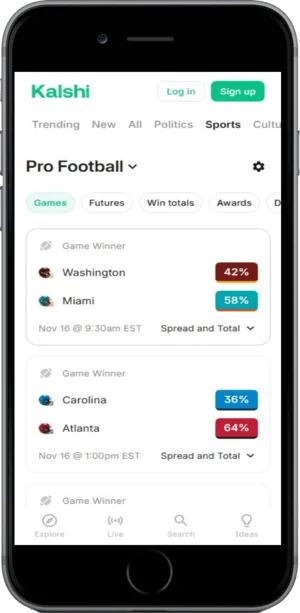
Nearly all of these contracts are binary, meaning each one answers a single yes-or-no question, like “Will the defending champion repeat?” or “Will inflation finish the year above 3%?” Prices usually run from $0.01 to $0.99, and the price doubles as the market’s implied probability for that outcome.
For example, if a “Will it rain tomorrow?” contract trades at $0.30, the market is pricing rain at roughly 30%. Believe the odds are better than that? You could buy in at $0.30. Should it rain, the contract pays $1.00 for a $0.70 gain. Should it stay dry, the contract is worth nothing.

Say one trader expects a downpour and buys, pushing the price higher. Another sees a sunny forecast and sells, pulling it back down.
You don’t have to hold a contract until the event ends. You can sell to another trader at any point beforehand, which means profits don’t have to wait for the outcome.
If that rain contract doubles to $0.60 once a new forecast comes out, you could sell immediately and pocket $0.30 per contract, regardless of whether it ends up raining.
Is Prediction Market Trading Legal in the US?
Yes, as long as the platform operates within the federal rules that govern event contracts.
The safest route for US traders is a platform registered with or approved by the CFTC. Polymarket now serves American users through its federally regulated Polymarket US platform, Kalshi holds designated contract market status, and PredictIt’s parent, Aristotle Exchange, received CFTC approval in 2025.
Offshore and unregulated crypto sites are a different story. Many restrict American users, skip the consumer protections regulated platforms must provide, or sit in murky legal territory. State challenges to sports contracts are also ongoing, so availability can change. For a full breakdown of CFTC oversight and the state-by-state legal fights, see our prediction markets guide.
Types of Prediction Markets You Can Trade
Prediction markets cover a huge range of topics, from sports and politics to crypto, economics, and entertainment. The table below breaks down the most popular categories and the kinds of outcomes you can trade in each.
| Market Type | Practical Example |
|---|---|
| Politics | Will the Republican Party win the 2026 midterm elections? |
| Sports | Will the Lakers make the NBA playoffs this season? |
| Economics | Will the Federal Reserve cut interest rates in the next meeting? |
| Pop Culture | Will Taylor Swift announce a new album before year-end? |
| Crypto | Will Bitcoin reach $100,000 by December 2025? |
| Climate | Will this summer be the hottest on record globally? |
| Mentions | Will Elon Musk mention "Dogecoin" in his next 10 tweets? |
| Companies | Will Apple's stock price exceed $200 by earnings day? |
| Financials | Will inflation stay below 3% for the next quarter? |
| Tech and Science | Will OpenAI release GPT-5 before the end of 2025? |
| Health | Will the WHO declare a new pandemic this year? |
| World Events | Will there be a ceasefire in any major conflict by March 2026? |
How Sports Prediction Markets Work

Sports prediction markets don’t work like a typical sportsbook. You can buy and sell your position while the game is still being played.
Final scores are only the start. Markets also cover player stats, season milestones, and even offseason trades or draft selections.
The biggest draw is that prices move during the action. If your team starts strong, your contract gains value, and you can sell at a profit before the final whistle.
Example: NFL Prediction Markets
On an NFL prediction market, you could pick up a Super Bowl winner contract on a team in September. If that team gets off to a hot start, the price rises, letting you cash out at a gain long before February.
Popular NFL markets include MVP races, playoff berths, statistical records, and coaching changes, many of which you won’t find on typical NFL betting sites.
Live trading is what makes sports markets so dynamic. Injuries, breaking news, and momentum swings can move prices quickly, creating openings for traders who react fast.
How Political Prediction Markets Work
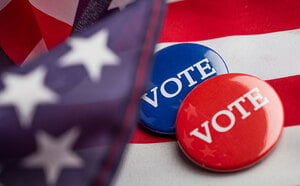
Political prediction markets have a strong track record of forecasting elections, and they often hold up well against polls because they pool the views of many traders who have real money on the line.
Contracts cover everything from the White House to local ballot questions. Common contracts include:
- Election winners
- Margin of victory
- Electoral College outcomes
- Policy decisions
- Scandals or resignations
Prices react immediately to debates, new polls, campaign developments, and world events that could sway voters.
Political markets are especially useful for pricing messy scenarios polls can miss. A poll may show one candidate ahead, while the market also factors in late-breaking news, third-party candidates, or turnout concerns.
How Crypto Prediction Markets Work
Crypto prediction markets aren’t the same as gambling with cryptocurrencies. Instead, traders take positions on where digital assets and blockchain projects are headed.
Typical contracts cover questions like:
- Where Bitcoin’s price will finish the year
- Whether major Ethereum upgrades ship on schedule
- New crypto ETF approvals
- Major exchange failures or hacks
These markets respond instantly to regulatory news, security incidents, institutional adoption, and technology breakthroughs, and prices show whether the crowd expects crypto to rise, hold steady, or fall.
They’re also a useful way to gauge sentiment in a notoriously volatile industry. Analysts might forecast steady Bitcoin gains, while the market factors in threats such as tougher regulation or rising competition.
Your First Prediction Market Trade: Step by Step
Opening an account on a prediction market doesn’t take long, but a few smart decisions at the start can make a big difference. Follow these steps to place your first trade:
Pick a platform and open an account
Choose a site that matches what you want to trade. Polymarket and Kalshi cover the broadest mix of regulated markets, while PredictIt is a longtime favorite for US politics.
Sign up using your personal information and confirm your identity with a government-issued ID, a standard requirement on legitimate platforms.
Add funds to your account
Once you’re verified, deposit using a bank transfer, debit card, or another supported method. Some crypto-based platforms fund accounts in USDC instead.
Deposit only what you’re prepared to lose. Minimums on many platforms run from about $10 to $50.
Learn how the markets work
Browse available markets before you commit, and read each contract’s rules to understand how it will be settled.
Stick to subjects you follow closely, and use historical data, news, and community discussion to inform your decisions.
Make your first trade
Start with simple markets that have clear-cut outcomes, and take a small position on something you feel strongly about.
Watch how the price moves as news breaks and other traders react.
Manage your open positions
Check your positions regularly and adjust when it makes sense. Selling ahead of the result lets you bank gains or cut losses.
Set up news alerts for events tied to your markets, and don’t hesitate to exit early if the situation changes or you reach your profit goal.
Every Prediction Market Platform We Track
The table below lists every prediction market platform we track, from CFTC-regulated exchanges to brokerage add-ons and crypto-based sites, so you can compare your options in one place.
| Predictions Platform | Regulation Status | Market Focus | Payment Methods |
|---|---|---|---|
| FanDuel Predicts | CFTC Regulated | Mainstream consumer event contracts | Debit card, online banking |
| OG | CFTC Regulated | Broad event prediction markets | Bank account (ACH/Plaid), debit card, Apple Pay, Google Pay, PayPal, Venmo, wire transfer |
| Polymarket | Unregulated | Politics, current events | Cryptocurrency (USDC) |
| ProphetX | CFTC Regulated | Sports-focused prediction exchange | Trustly bank transfer, Aeropay, debit/prepaid cards, PayNearMe cash deposits |
| Underdog Predict | CFTC Regulated | Sports | Debit & Credit Cards, PayPal, Apple Pay, Trustly |
| DraftKings Predictions | CFTC Registered | Sports, financial | debit cards (Visa/Mastercard), PayPal, Venmo, Apple Pay and online banking/ACH |
| Crypto.com | Various licenses | Crypto-focused events | Bank transfer, crypto, cards |
| Fanatics Markets | CFTC Regulated | Sports, finance, economics, and politics | Debit card, Apple Pay, wire transfer |
| Kalshi | CFTC Regulated | General events, economics, politics | Bank transfer, debit/credit cards |
| PredictIt | Academic exemption | Politics only | Bank transfer, debit/credit cards |
| Interactive Brokers | SEC/CFTC Regulated | Financial events | Bank transfer, wire transfer |
| Robinhood | SEC Regulated | Limited financial events | Bank transfer, debit cards |
| Webull | SEC Regulated | Limited financial events | Bank transfer, debit cards |
| NinjaTrader | CFTC Regulated | Financial/economic events | Bank transfer, wire transfer |
| Manifold | Play money only | All topics | No real money required |
| Drift Protocol | Unregulated | Sports, general events | Cryptocurrency |
| Betfair Exchange | UK regulated | Sports, politics, entertainment | Various (offshore access) |
| Smarkets | UK regulated | Sports, politics | Various (offshore access) |
| Gnosis | Decentralized | General events | Cryptocurrency |
| Augur | Decentralized | General events | Cryptocurrency |
| Omen | Decentralized | Sports, politics | Cryptocurrency |
| Reality Cards | Unregulated | Entertainment, sports | Cryptocurrency |
| Catnip Exchange | Unregulated | Various events | Cryptocurrency |
| Hedgehog Markets | Unregulated | Crypto, sports | Cryptocurrency |
Regulatory status, available markets, and state access differ widely across this list, so read our full review of any platform before you open an account.
How to Pick the Right Prediction Market Platform
The best prediction market for you depends on what you want to trade, how you like to trade, and how much risk you’re comfortable taking. These are the factors that matter most.
If safety and legal protection top your list, choose platforms that are properly regulated. CFTC-regulated options like Polymarket US and Kalshi provide the strongest consumer protections, formal dispute processes, and federal backing.
Offshore sites may list more unusual markets, but they carry extra risks, including frozen accounts, withdrawal problems, and legal uncertainty. Beginners are better off starting on a regulated platform.
Match the platform to the events you follow. PredictIt focuses almost entirely on politics, while Polymarket offers the widest range of current-events markets.
If sports are your main interest, a sports-first exchange such as ProphetX or Novig may suit you better. A popular app isn’t much use if it skips the markets you care about.
Look for busy markets and narrow bid-ask spreads in the categories you plan to use. Strong liquidity lets you get in and out of positions without moving the price much.
Look at trading volume and participation in markets like the ones you want to trade. Even a feature-rich platform can be frustrating if too few traders are active, since fair prices and quick fills become harder to find.
Tally every cost, from per-trade fees to deposit and withdrawal charges. Some platforms promote “no fees” but earn their margin with wider spreads or less favorable conversion rates.
Also consider how easily you can move money in and out using the payment methods you prefer. International wires and crypto transfers can carry extra costs that build up over time.
Test any platform with a small amount first to see how the interface, support team, and overall experience hold up before depositing more. A few platforms, such as Pariflow and Manifold, also offer demo or play-money modes.
Notice how fast orders fill, how clearly contract rules are explained, and whether the mobile app works well if you’ll mostly trade from your phone.
Prediction Market Strategies and Trading Tips
With the basics covered, the next move is developing a strategy that helps you trade consistently over the long run. Skilled traders lean on discipline, sound risk control, and a defined plan rather than luck.
The tips below cover beginners and experienced traders alike. Want more on value trading, bankroll sizing, arbitrage, and the errors that cost beginners the most? Head to our in-depth prediction market strategies guide.
Tips for Beginners
1. Start Small and Trade Familiar Topics
Early on, keep position sizes modest and focus on subjects you understand well.
Headline markets like national elections draw enormous attention, but niche markets, such as local races, industry events, earnings results, sports injuries, and tech launches, can give newcomers a better shot at an edge.
2. Control Costs With Limit Orders
Resist the urge to place market orders. A limit order caps what you’ll pay, which keeps you from overpaying and shields you from sudden price jumps.
It’s a simple habit that saves money and makes your results more consistent over time.
3. Protect Your Bankroll
No one calls every event correctly, and prediction markets can surprise even careful traders. Keep every position to an amount you’re comfortable losing, since overconfidence is one of the quickest ways to drain a bankroll.
Strategies for Experienced Traders
1. Watch for Arbitrage Opportunities
Arbitrage takes advantage of small pricing gaps between platforms. When the same outcome is priced differently on two sites, buying the cheaper side on one and the opposite side on the other can lock in a small profit.
These gaps are usually narrow and disappear fast, especially with bots monitoring prices, so arbitrage is an advanced tactic that rewards speed. To find these opportunities more easily, the GamingToday roundup of prediction market tools includes dedicated arbitrage scanners.
2. Hedge to Limit Your Exposure
Hedging works like insurance. If you hold a large position on one outcome and start to doubt it, taking a smaller position against it can soften the blow.
Hedging reduces your risk but also limits your upside, which makes it most useful when volatility spikes or you want to protect gains you’ve already built.
3. Spread Trades Across Market Types
Avoid putting your whole budget on one outcome or category. Spread positions across sports, economics, weather, tech, politics, and other topics.
Diversifying protects you from sharp swings in any single market and supports steadier results over time.
Sports Prediction Markets vs. Sports Betting

Sports prediction markets and sportsbooks have a lot in common, but their underlying models differ in ways that affect how you trade and how much you can make.
The most important difference is who sets the price.
Traditional online sportsbooks set their own odds and build in a margin for the house, while prediction markets let traders set contract prices through supply and demand. In other words, your counterparty is another trader, not the house.
Timing is another big edge. A typical sports wager locks you in until the game is over, whereas a prediction market lets you enter or exit a position whenever you like before the event wraps up.
Say your team races out to a big first-half lead. You can cash out that contract immediately rather than sweating the fourth quarter.
Prediction markets also cover far more ground. Sportsbooks stick mainly to game lines and player props, while prediction platforms add politics, elections, economics, entertainment, and current events, so you can trade an election and an awards show from the same account.
Profit potential works differently, too. A sports bet pays a fixed amount based on the odds when you place it, while a prediction market can deliver bigger returns if you spot a mispriced contract early.
The flip side is that losses can arrive faster if sentiment turns against you, even before the event is decided. For a detailed look at how the two models handle pricing, taxes, and regulation, read our prediction markets vs. sports betting comparison.
Prediction Markets vs. the Stock Market
Prediction markets and the stock market both let you trade on what you expect to happen, but they differ in what you actually buy and how long a position typically lasts.
The biggest distinction is ownership. A share of stock is a lasting stake in a company that can grow in value indefinitely and may pay dividends.
A financial prediction market contract, by contrast, is tied to one event with a yes-or-no outcome and a fixed expiration. Stock can grow for decades, while a prediction contract either pays out or expires worthless within days or months.
Pricing is based on different things entirely. A share price is driven by expectations for a company’s future earnings and growth. A prediction market price is just the crowd’s probability estimate for one event, so a $0.70 contract implies a 70% chance.
Risk and reward also look different. Stocks have no ceiling on potential gains and can build wealth through compounding over time.
Prediction contracts cap your payout at $1, but they resolve faster and offer more frequent opportunities to trade. You might hold a stock like Apple for years, while most prediction positions settle within weeks.
Finally, the information flow isn’t the same. Equity investors lean on quarterly results, analyst notes, and regulatory filings that come out on a predictable calendar.
Prediction markets react to news, polls, and live events the moment they happen, which makes them more volatile but also quicker to reflect breaking developments.
Prediction Markets: Pros and Cons
Prediction markets bring some clear benefits compared with sportsbooks and opinion polls, but they have drawbacks too. Here’s what makes them appealing, and what to watch for before you commit real money.
Pros
- Crowd-Powered Forecasting | When traders have money at stake, they tend to research more carefully, which helps market prices reflect well-informed expectations.
- Flexible Exits | Unlike most sports bets, you can close a position early to secure gains or trim a loss.
- Wide Range of Markets | A single platform can cover elections, sports, entertainment, and economic data, giving you plenty of ways to put your knowledge to use.
Cons
- Thin Niche Markets | Obscure markets can attract only a handful of traders, which makes fair fills harder to come by.
- Shifting Regulation | Legal status varies by state and platform, and ongoing court and regulatory fights can change what’s available where you live.
- Emotional Trading | Combining money with strong personal opinions can lead to decisions driven by bias rather than probability.
Final Thoughts: Are Prediction Markets Worth Trying?
If you follow politics, sports, the economy, or pop culture closely, prediction markets offer a way to turn that knowledge into a position, priced by the crowd’s live view of each outcome.
- 🎯 Trade what you know. Stick with categories you track closely, like an NFL season, an election cycle, or earnings season, since research-backed trades usually outperform hunches on subjects you don’t know well.
- 📈 Start with small positions. Keeping stakes low while you learn shows you how your own forecasts measure up against the market’s pricing.
- 🏛️ Keep an eye on regulation. The landscape changes fast, with new apps and rules appearing regularly, so a site’s registration status and the states it serves can change.
- 📚 Learn the terminology. Terms such as strike, settlement, and contract carry specific meanings in this space, and our prediction market glossary explains each one in plain English.
- 🔎 Our take. Prediction markets suit people who already know a subject well and want a sharper tool for acting on that expertise than a traditional wager or stock purchase provides.
How We Test and Rank Prediction Market Platforms
We review dozens of platforms here, ranging from federally regulated exchanges such as Polymarket and Kalshi to brokerage-based choices such as Webull and NinjaTrader, and every one is measured against the same standards regardless of size or specialty.
- Regulatory Standing | We confirm each platform’s legal structure, from registered exchanges and licensed brokers to offshore operators, because that determines who can use it and how well your money is protected.
- Fee Transparency | Per-contract charges, spreads, and less visible costs are compared side by side instead of taking marketing claims at their word.
- Market Depth and Variety | We count the categories each platform supports and check whether genuine trading activity backs up those listings.
- Funding and Withdrawals | We look at how you can deposit, how long payouts take, and what withdrawals cost, since getting your money out matters as much as putting it in.
- Platform Usability | Our team uses each platform on mobile, desktop, and web firsthand instead of judging it from promotional images.
- Geographic Availability | We map out where each platform is available by state and country, because access rules vary a lot, even between regulated operators.
Any platform ranked here has passed all six checks, not just the flattering ones. Our complete methodology is laid out on our how we rate and review online gambling sites page.
Prediction Market FAQs
Minimum deposits usually fall between $10 and $50, and individual contracts can often be bought for $1 or less. PredictIt, which raised its per-contract investment limit to $3,500 in 2025, is also easy to start on with a small balance.
Prediction markets often perform well against polls and expert forecasts because traders have money at stake, which encourages careful research. They aren’t perfect, though, and accuracy varies by market, especially in thinly traded contracts.
No. When you buy a contract, the most you can lose is what you paid. If a $0.30 contract expires worthless, your loss is $0.30 per contract. Buying a contract outright involves no leverage or margin, so losses can’t grow beyond your stake.
Nope. Positions can be sold any time before the event wraps up. If a contract climbs from $0.20 to $0.50, selling right away locks in $0.30 per contract.
Generally, yes. Profits from prediction markets are typically taxable in the US, although how they’re classified can vary by platform and contract type. Keep detailed records of your trades and talk with a tax professional. Regulated platforms typically issue tax forms, which offshore sites often don’t.


